
How Long Do Credit Card Payments Take to Settle?
Credit card payments typically take 1–3 business days to settle, although some transactions can settle as quickly as the next business day. The exact…
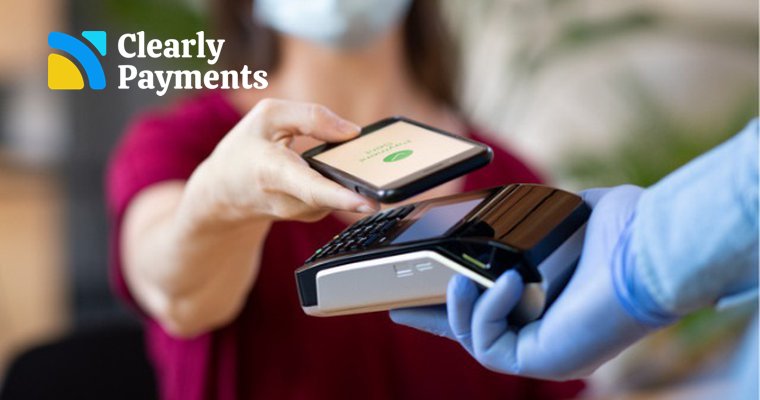
Around the year 2020, the usage of contactless payments drastically increased as customers and businesses looked for ways to minimize physical handling of cash and payment terminals such as PIN pads. In Canada and U.S., the use of contactless payments increased by 150% within a one year period. It is growing very fast because of its convenience and security.
Contactless payments most generally refer to payments made using near field communication (NFC) technology which is embedded into credit cards and mobile devices. We describe the technology in more detail below. Sometimes contactless payments are known as “tap payments” or even “Apple Pay” or “Samsung Pay”.
A contactless payments are the process where a consumer has a mobile device, credit card, or debit card that allows them to hold their device near the payment terminal to conduct a payment transaction without physically touching the payment terminal or PIN pad.
Contactless payments were historically used for low value purchases with limits put on by banks. The limit started at around $50 per transaction. However, banks have been increasing the limits over time due to the high popularity of contactless payments. A common limit in 2022 is around $250.
As we move forward into the future, we will see contactless payments and related technologies continue to grow. Payments will become more embedded into our devices, apps, and software that we use every day.
This evolution will broaden the term “contactless” to mean more than purely NFC enabled payments to include anything that creates “seamless” payments. We will also see new methods to streamline the experience and improve security with biometrics, voice recognition, and location awareness.
There are many benefits of contactless payments for both merchants and consumers. Due to the benefits below, you can easily understand why it is growing so fast.
You don’t have to enter a PIN for contactless transactions. You don’t even need to touch a terminal. This means fewer line ups and a faster checkout experience. This is good news for merchants and consumers.
Consumers don’t need to carry a wallet. This is another layer of convenience. It turns out that consumers are more likely to forget their wallet than their phone. Therefore, consumers can purchase even if they forgot their wallet which will also increase unplanned purchases. All consumers need is a phone that supports NFC, which is most phones these days.
Contactless payments along with NFC technology is very secure. A device needs to be within 4cm of a payment terminal for it to transact. In addition, if there is any interference with other contactless devices or credit cards, the transaction will not be supported. The fact that contactless payments are EMV compatible means that merchants do not hold the liability for fraud. This is really good news for merchants.
Contactless payments minimize any physical contact, reduces line up congestion, and speeds up the time someone is in their store. This means that contactless payments is hygienic and COVID-safe which is very important for consumers and merchants.
NFC technology allows devices that are in close proximity to each other to easily communicate and share data. Unlike WiFi or Bluetooth, NFC is limited to an extremely short range, generally less than 10cm. In payments, they have limited its use to 4cm.
NFC is based on communication between two antennas, or “chips”, present on NFC-enabled devices. NFC technology is increasingly used in security, access control, gaming, marketing and customer engagement.
If you want to accept contactless payments, you will need an NFC enabled device. The good news is that most payment terminals these days support NFC. Almost all credit card machines that Clearly Payments offer is a contactless device. You will see a symbol similar to the one below on most credit cards, devices, and payment terminals that support contactless payments.

Clearly Payments can review your processing setup, pricing or payment technology.
Talk to Clearly →
Credit card payments typically take 1–3 business days to settle, although some transactions can settle as quickly as the next business day. The exact…
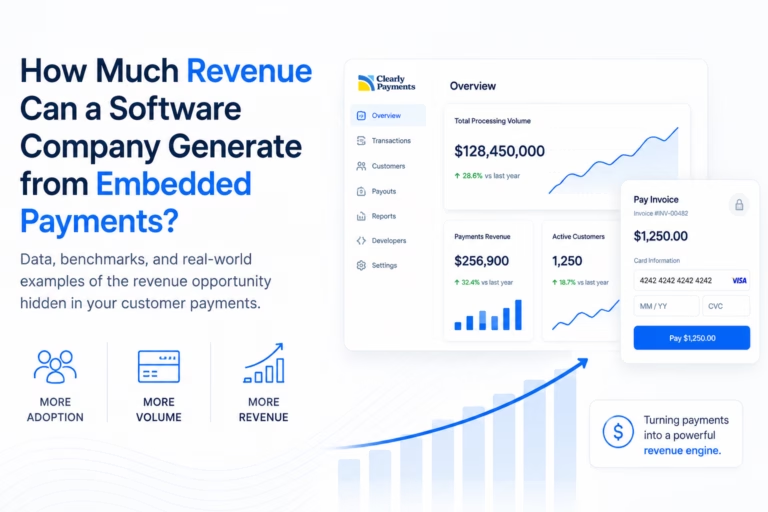
For many software companies, subscription (SaaS) revenue has traditionally been the primary business model. Customers pay a monthly or annual fee to access the…
Artificial intelligence is rapidly evolving from a passive assistant into an active participant in the economy. Today, AI systems summarize documents, answer questions, generate…