


Key Takeaways:
- Dental clinics typically pay between 1.5% and 3.0% in total payment processing fees depending on card mix and setup
- Insurance-driven billing creates delayed cash flow and split payment complexity
- Many clinics overpay due to legacy pricing models and lack of optimization
- Simple changes to payment setup can reduce costs by 20%–40% in many cases
Dental clinics operate very differently from most businesses when it comes to payments. Transactions are often high value, partially covered by insurance, and spread across multiple visits, which creates complexity in billing, collections, and cash flow.
A well-structured payment setup can reduce costs, improve patient experience, and accelerate cash flow. A poor setup does the opposite, often without the clinic realizing how much it is losing.
This guide explains how payments actually work in a dental office, what dentists typically pay in fees, and how to optimize your setup in Canada.
How Payments Works in a Dental Office
Payments in dentistry are tied closely to treatment workflows and insurance, which makes them more complex than standard retail transactions.
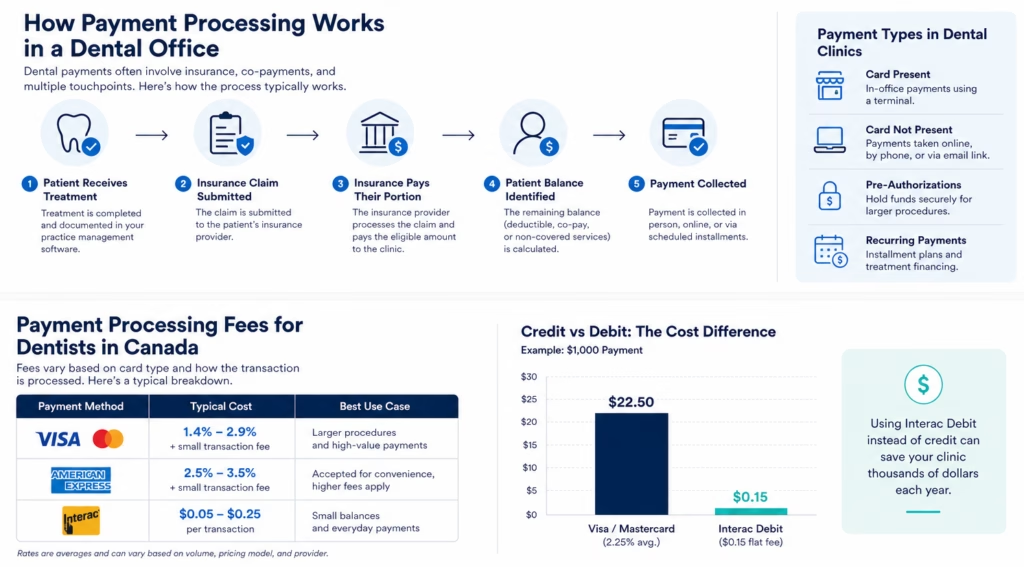
A typical flow looks like this:
- Patient receives treatment
- Insurance claim is submitted
- Insurance pays a portion
- Remaining balance is billed to the patient
- Payment is collected in person or online
This creates a mix of:
- Card-present payments, at the front desk
- Card-not-present payments, via email or phone
- Split payments, across insurance and patient responsibility
- Pre-authorizations, for larger procedures
Unlike retail, where payment happens immediately, dental payments are often delayed, partial, and require follow-up.
Common Dental Payment Methods in Canada
Dental clinics in Canada typically support a mix of payment options to accommodate patient preferences and maximize collections.
Credit and Debit Cards
- Visa and Mastercard dominate for larger procedures
- Debit transactions through Interac are common for smaller balances due to lower fees
Online Payments
- Email or SMS payment links
- Hosted checkout pages for outstanding balances
- Increasingly important for post-visit collections
Recurring Billing
- Used for treatment plans and installment payments
- Requires secure card storage and tokenization
Patient Financing
- Third-party financing options for high-cost procedures
- Helps increase treatment acceptance rates
Payment Processing Fees for Dentists in Canada
Payment costs vary significantly depending on how transactions are processed and which payment methods are used.
Typical ranges:
- Visa / Mastercard: ~1.4% to 2.9%
- American Express: typically higher
- Interac debit: flat fee, often $0.05 to $0.25 per transaction
Most clinics do not pay a single flat rate. Instead, fees are made up of:
- Interchange (set by card networks)
- Processor markup
- Additional fees (monthly, terminal, gateway, etc.)
Many dental clinics overpay because they are on outdated pricing models or are not optimizing for debit usage where appropriate.
Key Features Dentists Should Look For
Not all payment processors are built for dental workflows. The right setup should align with how clinics actually operate.
Integration with Dental Software
- Sync with systems like Dentrix, Tracker, or similar platforms
- Reduce manual reconciliation and errors
Pre-Authorizations
Ability to securely hold funds for large procedures
Important for managing risk on high-ticket treatments
Recurring Billing and Card Storage
- Tokenized card storage for installment plans
- PCI-compliant systems that reduce compliance burden
Fast Deposits
- Next-day or faster settlement
- Improves cash flow, especially for larger clinics
PCI Compliance and Security for Dental Clinics
Dental clinics handle both payment data and sensitive patient information, which makes security critical.
Key considerations:
- Use tokenization instead of storing raw card data
- Avoid writing down or manually storing card numbers
- Use hosted payment pages to reduce PCI scope
- Ensure your provider supports compliance requirements
Reducing PCI scope is not just about security, it also reduces administrative overhead and risk.
How to Reduce Payment Costs in a Dental Practice
Most clinics can reduce payment costs without changing patient behavior, just by optimizing how payments are processed.
Optimize for Interac Debit
- Encourage debit for smaller balances
- Flat fees are significantly lower than credit card percentages
Review Your Pricing Model
- Interchange-plus pricing is typically more transparent than blended rates
- Identify hidden markups and unnecessary fees
Use the Right Payment Mix
- In-person payments are usually cheaper than online or keyed transactions
- Avoid manually keyed transactions when possible
Eliminate Redundant Fees
- Multiple providers or outdated contracts often lead to overlapping costs
Even small improvements can meaningfully impact margins over time.
Best Payment Processors for Dentists in Canada
There is no single best processor for every clinic, but the right choice depends on pricing transparency, integration capabilities, and support.
When evaluating providers, focus on:
- Clear, transparent pricing
- Experience with dental workflows
- Integration with your practice management software
- Support quality and responsiveness
Clearly Payments works with clinics across Canada and focuses on transparent pricing, flexible integrations, and practical support tailored to how dental offices operate.
Frequently Asked Questions
How much do dentists pay in credit card fees in Canada?
Most dental clinics pay between 1.4% and 2.9% for credit cards, plus small flat fees for debit transactions.
Can dentists accept recurring payments?
Yes. Most modern processors support recurring billing with secure, tokenized card storage.
How long do payments take to settle?
Typically 1 to 2 business days for card payments, depending on the provider.
Do dental clinics need PCI compliance?
Yes, but modern payment systems can significantly reduce the scope and complexity of compliance.
Reduce your dental payment processing fees
- Transparent pricing, no hidden fees
- Built for Canadian dental clinics
- Easy setup, no disruption to your practice