
How Long Do Credit Card Payments Take to Settle?
Credit card payments typically take 1–3 business days to settle, although some transactions can settle as quickly as the next business day. The exact…
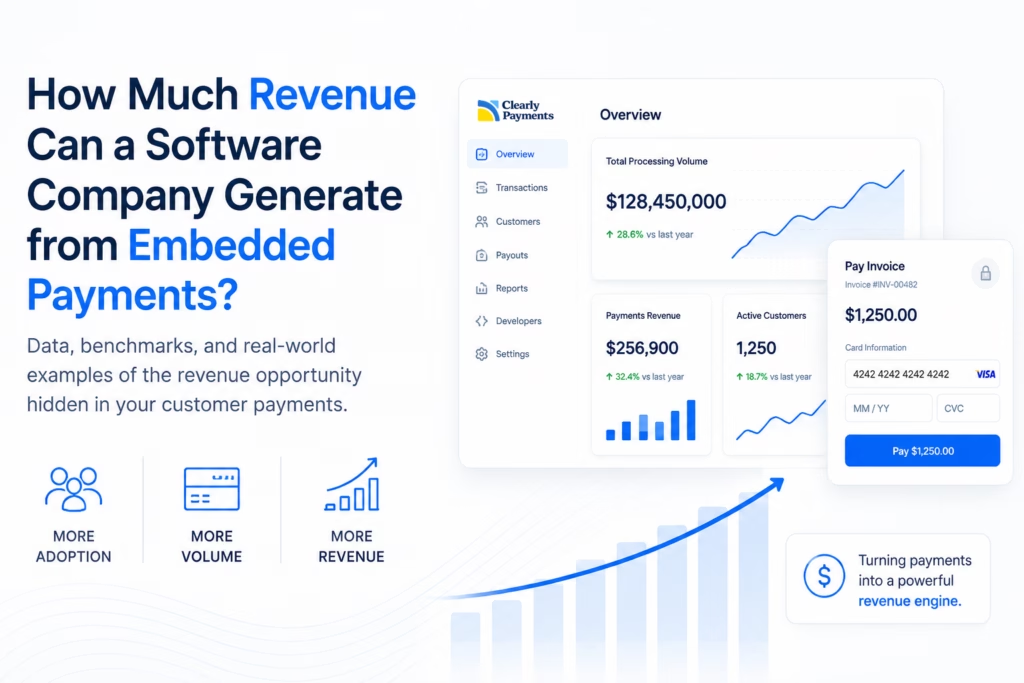
For many software companies, subscription (SaaS) revenue has traditionally been the primary business model. Customers pay a monthly or annual fee to access the platform, and revenue grows as the customer base expands.
Over the past decade, however, a growing number of software companies have discovered another significant source of revenue: embedded payments.
By allowing customers to accept payments directly within their software platform, companies can create a recurring revenue stream that grows alongside their customers’ businesses. In some cases, payments revenue becomes one of the largest contributors to overall company revenue.
This article examines the economics of embedded payments, explores typical payment volumes across industries, and models how much revenue software companies can potentially generate through integrated payment processing.
Embedded payments allow businesses to accept card and electronic payments directly within a software application.
Examples include:
Rather than sending customers to a separate payment provider, payment acceptance becomes part of the software experience.
In many cases, the software company receives a share of the payment processing revenue generated by its customers.
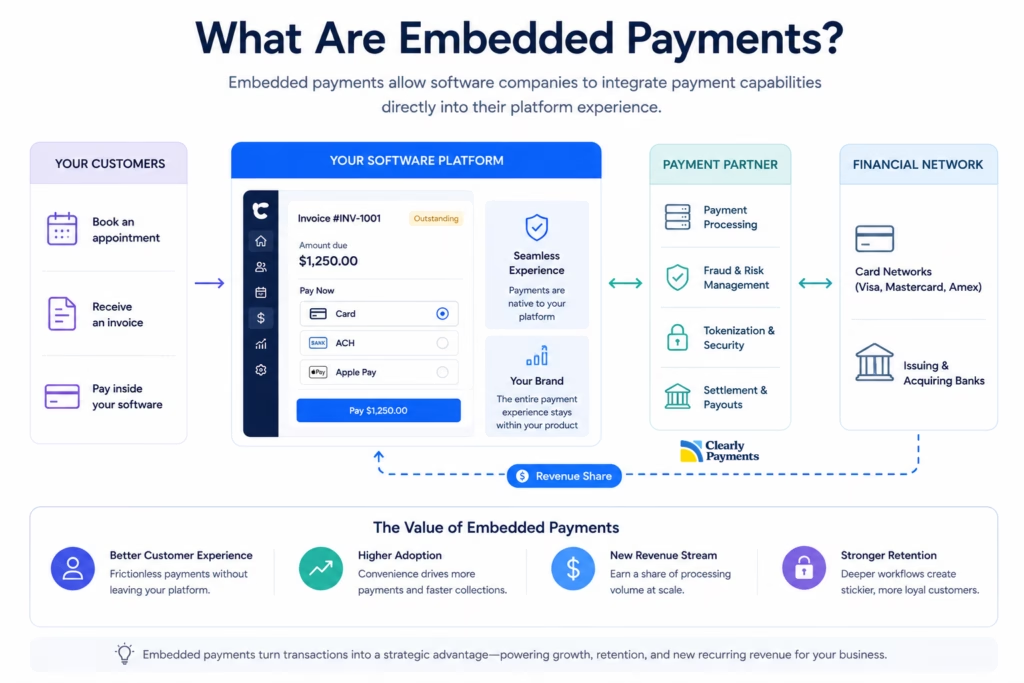
For software providers, embedded payments create an opportunity to participate in the payment processing revenue generated by their customers.
The economics are relatively straightforward. Each time a customer processes a payment, a small percentage of the transaction is collected as payment processing revenue. Depending on the partnership model, a portion of that revenue may be shared with the software provider.
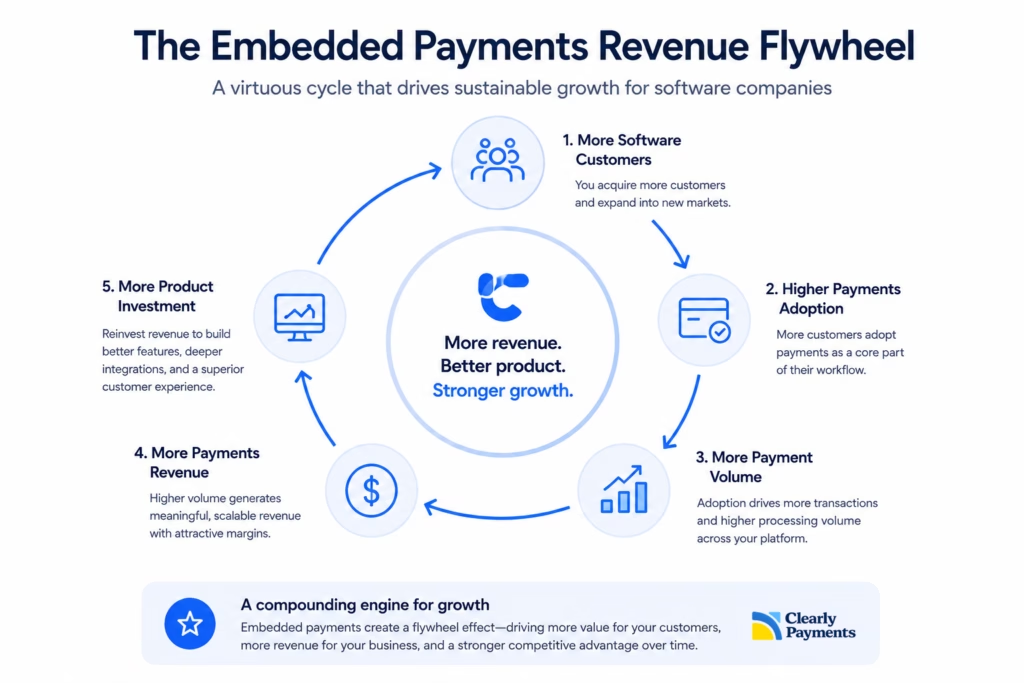
As a result, payment revenue tends to scale automatically as:
Unlike subscription revenue, which is often capped by seat counts or pricing tiers, payments revenue is tied directly to economic activity occurring on the platform.
A useful way to estimate the opportunity is through the following formula:
Annual Payments Revenue = Software Customers × Payment Adoption Rate × Annual Processing Volume per Customer × Revenue Share
While the formula is simple, the results can be significant when applied across hundreds or thousands of customers.
The revenue opportunity created by embedded payments varies substantially depending on the industry being served.
A key factor is the amount of payment volume processed by each customer.
The table below illustrates typical payment characteristics across several common software verticals.
| Software Vertical | Average Transaction Size | Typical Monthly Processing Volume |
|---|---|---|
| Dental | $200 – $400 | $50,000 – $150,000 |
| Veterinary | $100 – $250 | $50,000 – $175,000 |
| Home Services | $300 – $1,000 | $50,000 – $250,000 |
| Fitness | $50 – $150 | $50,000 – $300,000 |
| Legal | $500 – $2,000 | $25,000 – $200,000 |
| Professional Services | $500 – $5,000 | $25,000 – $500,000 |
Even relatively modest payment volumes can create meaningful revenue opportunities when multiplied across a large customer base.
Consider a dental practice that processes approximately $100,000 per month in card payments. This represents roughly $1.2 million in annual payment volume. If a software company receives a 0.20% revenue share on that volume, a single customer could generate approximately $2,400 per year in payments revenue.
While that figure may appear modest on its own, the economics become compelling when scaled across hundreds or thousands of customers.
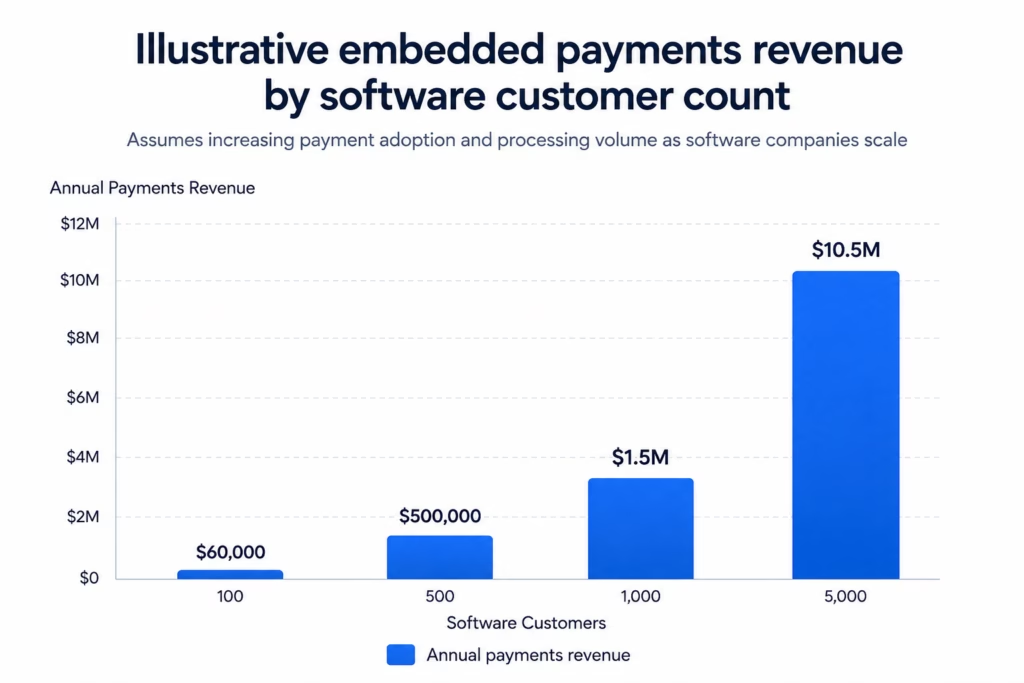
To understand the potential impact of embedded payments, consider several hypothetical software companies operating at different scales.
The following scenarios assume varying customer counts, payment adoption rates, annual payment volumes, and a revenue share of 0.20%.
| Software Customers | Payment Adoption | Avg Annual Volume per Customer | Annual Payments Revenue |
| 100 | 40% | $750,000 | $60,000 |
| 500 | 50% | $1,000,000 | $500,000 |
| 1,000 | 60% | $1,250,000 | $1,500,000 |
| 5,000 | 70% | $1,500,000 | $10,500,000 |
Several observations emerge from these examples.
First, customer adoption rates matter significantly. Increasing payment adoption from 40% to 70% can have a larger impact on revenue than adding new software customers.
Second, payment volume often grows over time. As customers expand their businesses, the amount of revenue generated through payment processing may increase without requiring additional sales effort from the software provider.
Third, the opportunity becomes increasingly attractive at scale. A software company with several thousand customers may be able to generate millions of dollars in annual payments revenue even with relatively conservative assumptions.
For many software companies, embedded payments become one of the most efficient sources of incremental revenue because the customer relationship already exists.
One of the most interesting aspects of embedded payments is that the revenue generated from payment processing can eventually rival or exceed subscription revenue.
Consider a software company with:
Now assume:
Under these assumptions, the software company would generate approximately $1.5 million in annual payments revenue.
If adoption rates increase, customer payment volumes grow, or revenue shares improve, payments revenue could eventually exceed subscription revenue altogether.
This dynamic is one reason many software companies have embraced integrated payments as a strategic initiative rather than simply a product enhancement.
Payments allow software providers to participate in the economic activity flowing through their platforms, creating a revenue stream that grows alongside their customers.
Many of today’s most successful software companies have incorporated payments into their business models.
Shopify, for example, built a commerce ecosystem that includes integrated payment acceptance as a core component of the merchant experience.
Toast combines restaurant management software and payment processing into a single platform designed specifically for hospitality businesses.
Lightspeed similarly offers integrated payments alongside its retail and hospitality software solutions.
While every software company has a different business model, these examples demonstrate a broader trend: software providers increasingly view payments as a strategic capability that strengthens customer relationships while creating additional revenue opportunities.
Not every embedded payments initiative produces the same results. The most successful programs typically share several characteristics:
At the same time, software companies must consider operational challenges such as compliance, risk management, merchant underwriting, chargebacks, fraud prevention, and customer support.
For this reason, many software providers choose to partner with specialized payment companies that provide the underlying infrastructure, operational support, and regulatory expertise required to launch and scale a payments program successfully.
Clearly Payments can review your processing setup, pricing or payment technology.
Talk to Clearly →
Credit card payments typically take 1–3 business days to settle, although some transactions can settle as quickly as the next business day. The exact…
Artificial intelligence is rapidly evolving from a passive assistant into an active participant in the economy. Today, AI systems summarize documents, answer questions, generate…
The payments industry has changed dramatically over the last decade. Businesses can now start accepting payments in minutes, software platforms are embedding financial services…