
What Are Level 2 and Level 3 Interchange Programs?
If your business accepts payments from other businesses, government agencies, or large organizations, you may be paying more in credit card processing fees than…
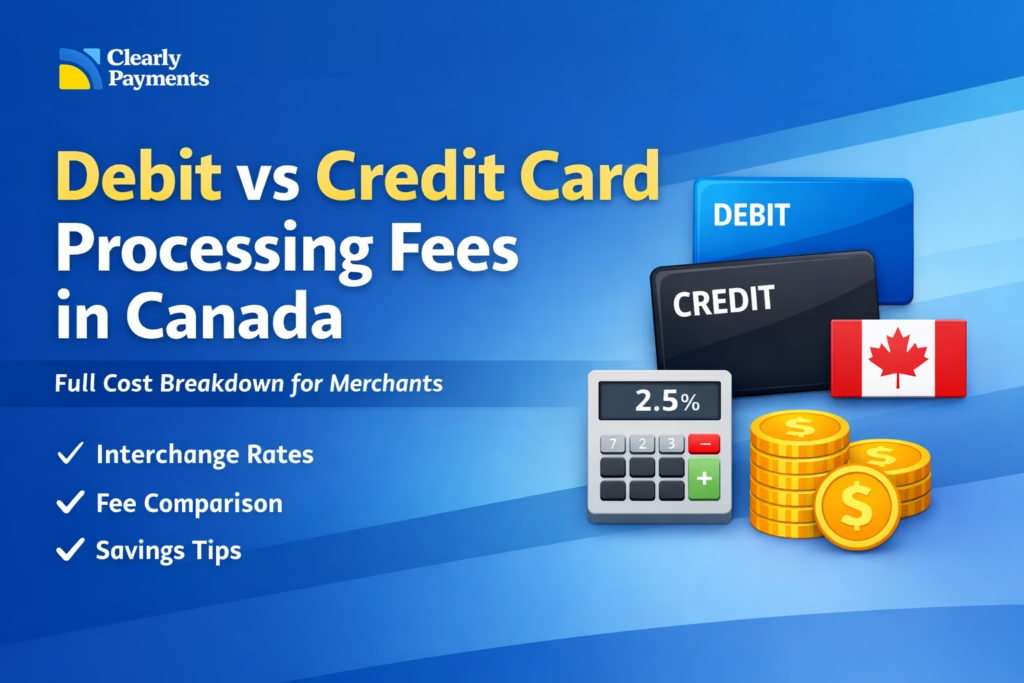
If you run a business in Canada, understanding payment processing fees can have a direct impact on your margins. Many merchants assume debit and credit card fees are similar, but the cost difference can be significant.
In simple terms:
This guide explains exactly what Canadian businesses pay and why.
Before going deeper, here is a simple comparison of typical merchant costs.
| Payment Type | Typical Merchant Fee | Who Sets Fee | Risk Level |
|---|---|---|---|
| Interac Debit | $0.02–$0.08 per transaction | Interac | Very low |
| Basic Credit Cards | 1.40%–1.70% | Visa / Mastercard | Medium |
| Premium Credit Cards | 1.75%–2.40% | Visa / Mastercard | Higher |
| Amex | 2.30%–3.50% | American Express | Higher |
Debit is cheap because funds come directly from the customer bank account. Credit cards cost more because they include lending risk, rewards programs, and fraud protection.
Many merchants think they pay one fee. In reality, payment costs usually contain three layers.
A typical credit card transaction includes:
These combine into your effective merchant rate.
Example:
Customer pays $100 with a premium Visa card:
Total cost: $2.20 or 2.20%
Debit cards in Canada run mostly on Interac. Unlike credit cards, Interac charges fixed transaction fees instead of percentage based fees.
Typical Interac merchant costs:
Because the fee is fixed, debit becomes cheaper as transaction size increases.
Example:
$10 purchase: Debit fee: $0.05 = 0.50%
$200 purchase: Debit fee: $0.05 = 0.025%
This is why many retailers encourage debit.
Credit card fees vary based on card type.
Factors affecting cost:
Typical interchange ranges:
| Card Type | Interchange Range |
|---|---|
| Basic cards | 1.25%–1.60% |
| Rewards cards | 1.50%–1.90% |
| Infinite cards | 1.75%–2.30% |
| Corporate cards | 2.00%–2.60% |
Premium cards cost more because rewards must be funded.
Many business owners are surprised to learn that customer rewards programs are funded partly by merchants.
Premium cards fund:
Those benefits come from higher interchange fees. This explains why a World Elite card may cost 40–70% more than a basic card.
Across industries, typical blended merchant rates are:
| Business Type | Typical Blended Rate |
|---|---|
| Retail | 1.45%–1.85% |
| Professional services | 1.50%–2.10% |
| Healthcare | 1.40%–1.80% |
| Restaurants | 1.60%–2.30% |
| E-commerce | 1.80%–2.70% |
Debit volume can significantly reduce averages.
Example mix:
Blended cost might fall near:
Many merchants overpay because they never review their pricing structure. Small adjustments can reduce costs without changing providers.
Practical ways to reduce fees:
Even a 0.15% reduction can save:
Many providers offer flat rates because they are simple. However, they often cost more.
Example flat pricing:
2.65% flat
Example interchange plus:
1.65% average + 0.20% markup = 1.85%
Difference:
0.80% savings potential.
For larger merchants, interchange plus is usually cheaper and more transparent.
Why do online transactions cost more?
Online payments have higher fraud risk and no physical card verification.
Typical difference:
Are debit fees regulated in Canada?
Interac operates differently than Visa and Mastercard. Fees are generally fixed rather than percentage based, which keeps costs predictable.
Can merchants pass credit card fees to customers?
Surcharging rules have evolved in Canada. Some businesses may add fees if they follow network rules and disclosure requirements.
Always verify compliance before implementing surcharges.
What is a good merchant rate in Canada?
Anything above ~2.50% usually deserves review.
Clearly Payments can review your processing setup, pricing or payment technology.
Talk to Clearly →
If your business accepts payments from other businesses, government agencies, or large organizations, you may be paying more in credit card processing fees than…
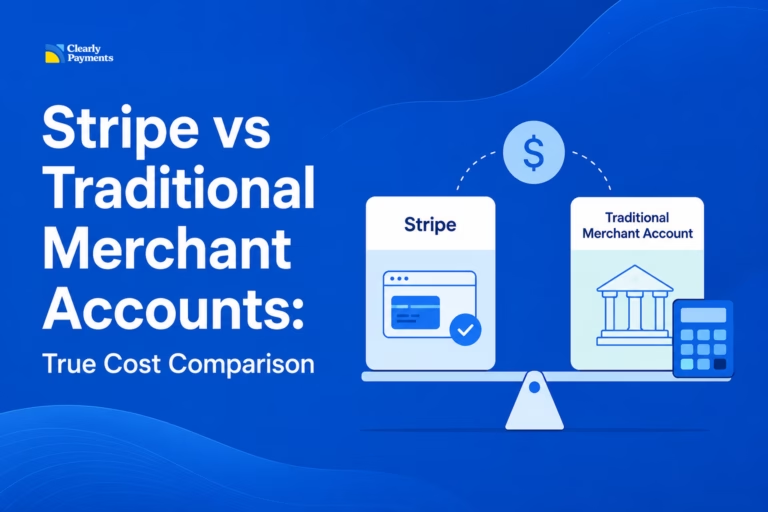
Spoiler: Processing rates are only one piece of the puzzle. Many businesses choose a payment processor based on a simple comparison: 2.9% + 30¢…
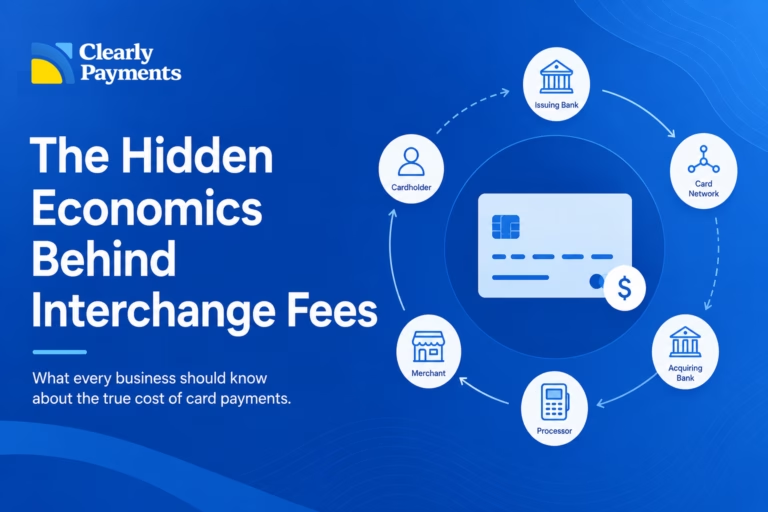
When a customer taps, inserts, or enters a credit card online, the transaction appears almost instantaneous. A receipt is generated, funds begin moving, and…