Payment Processing for Accountants and Accounting Firms
An accounting firm can finish a tax return on time and still spend weeks collecting the fee. A client forgets a cheque, an invoice…
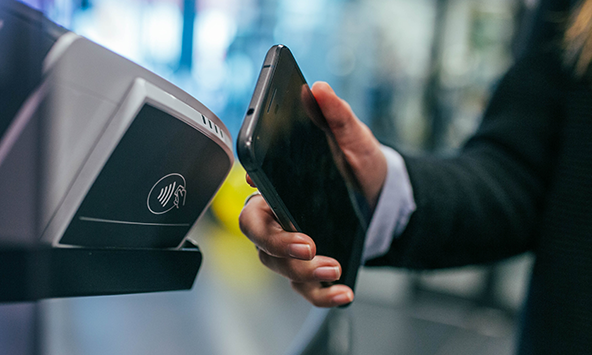
Contactless payment is when a consumer taps their card on the payment terminal (point-of-sale, POS) to authorize a transaction. There’s no PIN, no signature. It’s fast and it’s easy.
In 2016, approximately 40 per cent of merchant point-of-sale devices are contactless payment enabled. Contactless is out in the market and it’s growing. Contactless is supported by the credit cards and terminals that have the above symbol. Mobile devices have also started using contactless technology, which is NFC (near field communication), which is what Apple Pay uses on iPhones and Samsung Pay too.
The main benefit of contactless is that it’s fast and that means no line ups. Transaction charges are the same so there’s no cost benefit, but it makes it faster, bringing a better consumer experience for your customers. The experience of not having to enter your PIN is generally a welcome change for customers.
There is a cap on the transaction amounts for a contactless transaction, which is $100. If you have an average transaction amount below $100 and you want to reduce your line ups, or simply make things more convenient for your customers, contactless could be a way to go.
To use contactless, you just need a point-of-sale device that has the technology in it.

An accounting firm can finish a tax return on time and still spend weeks collecting the fee. A client forgets a cheque, an invoice…

Payment processing has become an increasingly important part of running a distribution business. As more commercial buyers expect to pay by credit card, virtual…

Key Takeaways: Dental clinics typically pay between 1.5% and 3.0% in total payment processing fees depending on card mix and setup Insurance-driven billing creates…