What Are Level 2 and Level 3 Interchange Programs?
If your business accepts payments from other businesses, government agencies, or large organizations, you may be paying more in credit card processing fees than…
When you’re in payments, you’re in an industry with thousands of competitors in a complex value chain. In fact, most of the industry involves just a handful of very large banks. However, the industry is so big that very large companies can be built by just taking a sliver of the industry. That’s why basis points exist.
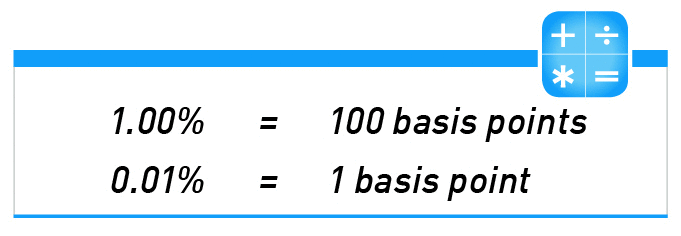
Basis points are a unit of measurement to describe a percentage, typically less than 1%. 100 basis points equals 1%. 50 basis points equals 0.5%.
1 basis point = 0.01% (1/100 of a percent) = 0.0001 in decimal form
Basis points, also referred to as bps or bips, are important because payment pricing is typically measured using fractions of a percent. That means basis points.
If your business accepts payments from other businesses, government agencies, or large organizations, you may be paying more in credit card processing fees than…
Spoiler: Processing rates are only one piece of the puzzle. Many businesses choose a payment processor based on a simple comparison: 2.9% + 30¢…
When a customer taps, inserts, or enters a credit card online, the transaction appears almost instantaneous. A receipt is generated, funds begin moving, and…