
How Long Do Credit Card Payments Take to Settle?
Credit card payments typically take 1–3 business days to settle, although some transactions can settle as quickly as the next business day. The exact…
Interchange fees, also known as swipe fees, are charges that merchants pay every time a customer uses a credit or debit card to make a purchase.
Interchange fees are set by credit card networks such as Visa and Mastercard and are paid to the card-issuing banks. Interchange fees are a cost for accepting credit cards and vary greatly across different industries. This article covers how much interchange different industries pay.
Interchange fees are composed of a percentage of the transaction amount and sometimes a fixed fee. The average interchange rate is approximately 1.81% in the USA and Canada.
Interchange fees cover the cost of transaction handling, fraud prevention, and credit risk associated with the transaction. While they might seem small on a per-transaction basis, they add up quickly, especially for businesses with high transaction volumes.
Industries pay different interchange rates due to several key factors that influence the cost and risk associated with processing transactions. These factors include the level of fraud risk, the average transaction size and volume, the type of card used, and the specific nature of the business. Here’s a more detailed explanation:
Different industries have varying levels of fraud risk associated with their transactions. This risk affects the interchange rates set by card networks:
The average transaction size and frequency can significantly impact interchange rates:
Each industry is assigned a specific Merchant Category Code (MCC), which influences the interchange rates applied:
In this section, we will explore how interchange fees differ across industries, examining the underlying reasons for these variations and the implications for businesses within each sector. The following rates are for the USA.
Retail Industry
The retail industry, one of the largest sectors accepting card payments, faces a broad range of interchange fees. These fees can vary significantly depending on the type of card and transaction.
Retailers with higher volumes can often negotiate lower rates, but smaller businesses may find these fees more burdensome. The introduction of premium cards, which offer more rewards to consumers, has also led to higher interchange rates.
Grocery stores generally benefit from lower interchange fees compared to other retail sectors. This is partly due to the high frequency of transactions and the lower risk associated with grocery purchases.
These lower rates help grocery stores manage their thin profit margins, which can be crucial for maintaining competitive pricing.
The restaurant industry, characterized by smaller ticket sizes and high transaction volumes, experiences a range of interchange fees depending on the card type and processing method.
The use of tips and pre-authorizations in the restaurant industry can also impact the interchange fees, sometimes leading to higher costs.
Fuel stations face unique challenges with interchange fees, partly due to the high incidence of fraud and the automated nature of many transactions.
These rates can fluctuate based on the type of card and whether the transaction occurs at the pump or inside the store.
The lodging industry, encompassing hotels and other accommodations, often deals with higher interchange fees due to the higher transaction amounts and increased fraud risk.
These higher fees reflect the increased risk and complexity of transactions in the lodging industry, including pre-authorizations and cancellations.
E-commerce businesses often face higher interchange fees compared to brick-and-mortar stores. This is due to the higher fraud risk associated with card-not-present transactions.
As online shopping continues to grow, these fees remain a significant concern for e-commerce businesses.
Utilities and government services typically enjoy lower interchange fees, reflecting the lower risk and necessity of these transactions.
These lower rates help ensure that essential services remain accessible and affordable for consumers.
The healthcare industry, including hospitals and medical practices, also faces specific interchange fees. These fees can be influenced by the high transaction amounts and the necessity of recurring payments for ongoing treatment.
These rates can vary based on the type of service provided and whether the payment is processed in-person or online.
Educational institutions, such as universities and private schools, also incur interchange fees for tuition and other payments. These fees are often influenced by the large transaction amounts and the frequency of payments.
Lower interchange fees for educational institutions help keep tuition costs manageable for students and families.
Charitable organizations and non-profits may receive preferential interchange rates to support their missions. These lower rates help maximize the funds available for their charitable activities.
These reduced fees reflect the lower risk associated with donations and the societal benefits of supporting charitable causes.
Several factors influence the interchange fees that businesses pay, including:
Clearly Payments can review your processing setup, pricing or payment technology.
Talk to Clearly →
Credit card payments typically take 1–3 business days to settle, although some transactions can settle as quickly as the next business day. The exact…
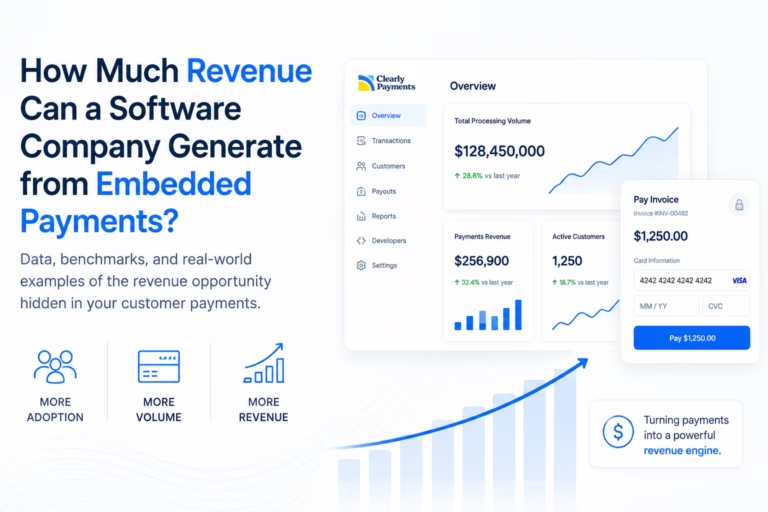
For many software companies, subscription (SaaS) revenue has traditionally been the primary business model. Customers pay a monthly or annual fee to access the…
Artificial intelligence is rapidly evolving from a passive assistant into an active participant in the economy. Today, AI systems summarize documents, answer questions, generate…