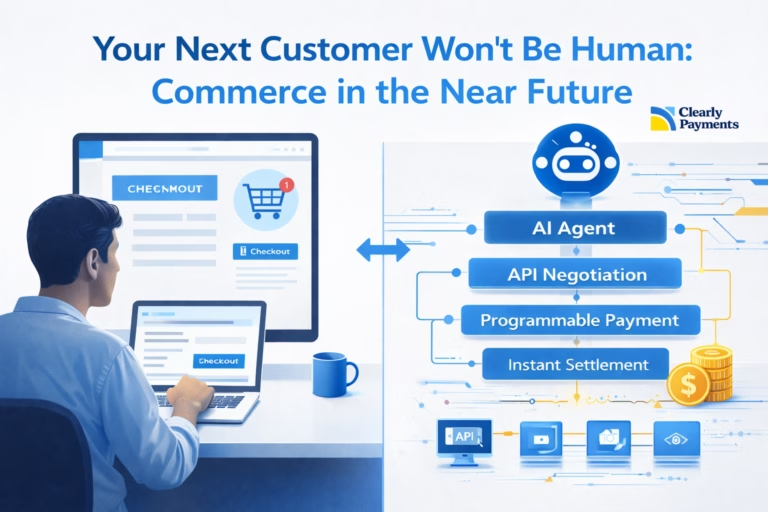
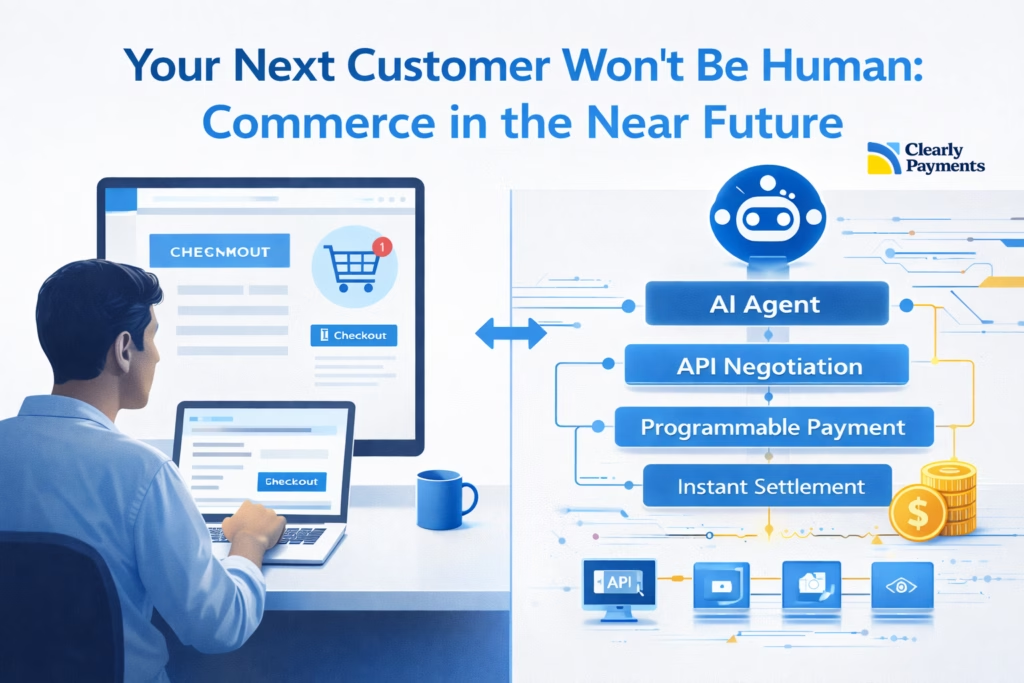
It’s a Monday morning in the near future.
Your fridge has already reordered groceries. Your car insurance premium dropped overnight after your AI renegotiated pricing across multiple providers. A delayed flight triggered an automatic rebooking before you woke up. Several software subscriptions adjusted themselves based on actual usage.
- You didn’t open an app.
- You didn’t compare prices.
- You didn’t click “buy now.”
None of these purchases were made by you. They were made by your AI agent.
This may sound distant, but the foundations of autonomous commerce are already being built, quietly, underneath today’s internet economy.
Commerce Is Losing the Human Middle Step
For decades, digital commerce has followed the same structure:
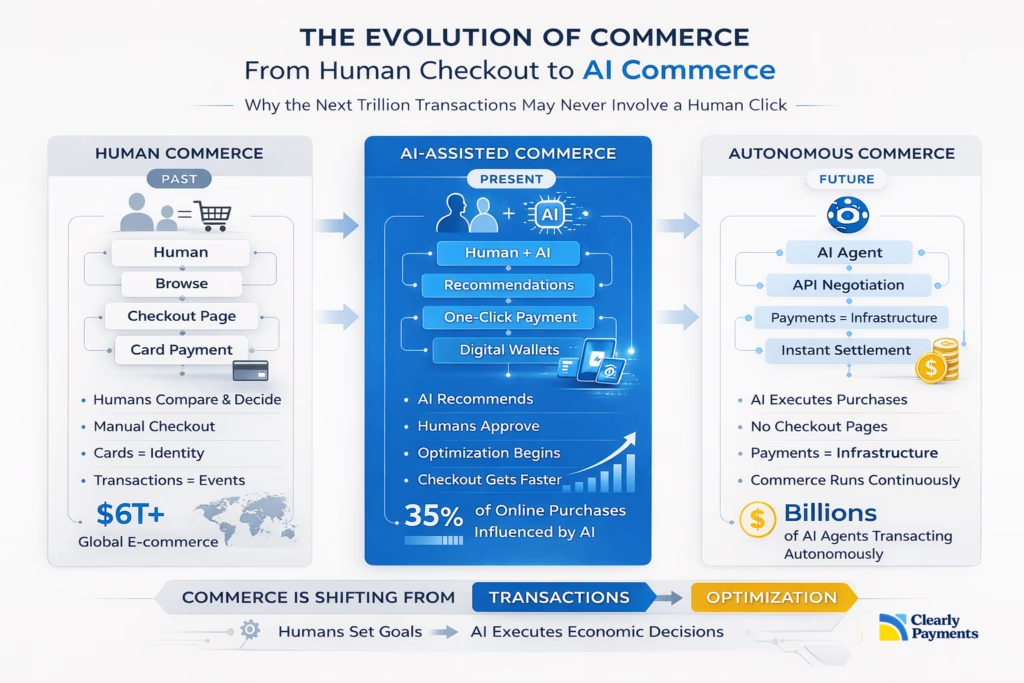
Human → Website → Checkout → Payment
Global eCommerce surpassed $6.8 trillion annually in 2025, yet nearly every transaction still requires a human decision at the final step. Entire industries have focused on reducing friction at checkout, one-click payments, stored cards, digital wallets.
But artificial intelligence changes the question entirely.
Instead of making checkout faster, AI removes the need for checkout at all.
We are moving from a world where software assists decisions to one where software executes them.
The progression is already visible:
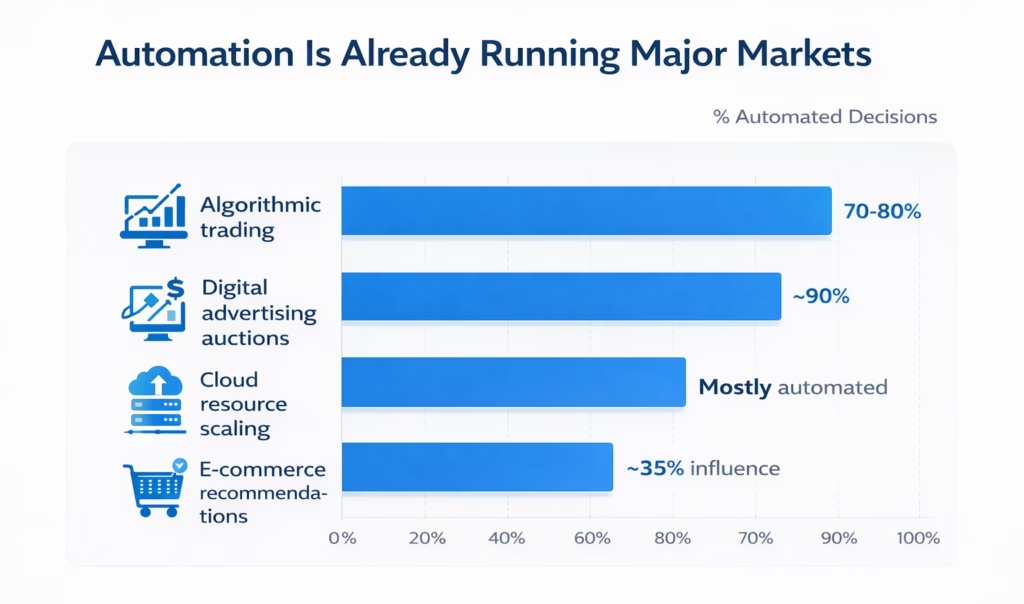
- Recommendation algorithms now drive over 35% of Amazon purchases through automated suggestions.
- Algorithmic trading accounts for roughly 70% to 80% of equity market volume in major U.S. exchanges.
- Cloud infrastructure platforms automatically scale and purchase computing resources without human approval thousands of times per second.
Commerce has already begun automating wherever decisions can be quantified. Consumer spending is simply the next frontier.
Your Next Customer Won’t Be Human
- compare pricing across thousands of vendors instantly
- negotiate structured outcomes
- monitor usage patterns continuously
- optimize decisions against predefined goals
- verified credentials
- payment authority
- programmable budgets
- transaction permissions
- trust and reputation signals
Checkout Was Never the Destination
The checkout page feels permanent because we designed commerce around human limitations. Humans need interfaces. Machines do not.
AI agents will not browse websites or enter card numbers. They will transact through APIs, permissions, and programmable payment logic.
Today’s payments infrastructure assumes:
- humans authenticate transactions
- cards represent identity
- payments are isolated events
- fraud involves stolen credentials
But fraud already reveals the system’s weakness. Global payment fraud losses exceeded $48 billion annually in recent industry estimates, largely because identity verification is tied to human credentials rather than intent or authorization logic.
Autonomous commerce flips the model.
Instead of verifying who clicked, systems verify whether the transaction fits authorized rules. Payments become policy-driven rather than action-driven.
The Rise of Autonomous Commerce
Early versions of machine-driven commerce already exist.
Digital advertising markets execute billions of automated auctions every day in milliseconds. Supply chains reorder inventory algorithmically. Ride-sharing platforms dynamically price transportation based on real-time demand.
These systems collectively process decisions far faster than humans ever could.
AI agents extend this automation into everyday spending.
Imagine markets where:
- personal finance agents continuously optimize subscriptions
- business AIs renegotiate SaaS contracts monthly
- logistics software purchases fuel or shipping capacity dynamically
- travel agents powered by AI arbitrage pricing across airlines automatically
Commerce becomes coordination between intelligent systems rather than individual purchase moments.
Payments Become Infrastructure, Not Experience
Over the past decade, payments innovation focused heavily on user experience.
Digital wallets reduced friction. Mobile payments improved convenience. Checkout optimization increased conversion rates.
But in an agent economy, user experience becomes secondary.
Machines do not care about interface design. They care about reliability, speed, and certainty.
The next generation of payment infrastructure will prioritize:
- real-time settlement
- programmable authorization
- API-native payments
- embedded compliance logic
- machine-verifiable identity
This shift is already underway. Real-time payment systems now operate in over 70 countries, while stablecoin settlement volumes have, at times, rivaled major card networks in annual transaction value.
The rails for machine commerce are quietly being laid.
Continuous Commerce Replaces Transactions
Perhaps the biggest conceptual shift is this:
Commerce stops happening in moments.
It becomes continuous.
Instead of discrete purchases:
- prices adjust dynamically
- services rebalance automatically
- payments flow as usage occurs
- financial decisions update constantly
Subscription models hinted at this future. AI completes it.
Payments evolve from transactions into streams of value exchange.
Finance, software, and commerce begin to merge into a single operational layer.
Who Wins in an Agent Economy
Every technological transition reshapes market leaders.
Companies built for automation, interoperability, and real-time settlement will benefit most. Systems dependent on manual onboarding, static pricing, or friction-heavy approval processes may struggle.
The opportunity is enormous because machine economies operate at exponential scale.
If each human manages dozens of AI agents, economic activity multiplies dramatically without increasing population.
The volume of economic decisions could expand by orders of magnitude.
The Invisible Revolution
The most transformative technologies rarely feel revolutionary at first. Electricity did not change society overnight. It quietly reorganized everything built afterward.
AI agents may follow the same path.
Initially, they will manage small decisions, renewing subscriptions, optimizing expenses, coordinating purchases. Gradually, more economic authority shifts toward automation because it is faster, cheaper, and more efficient.
Eventually, a large percentage of digital transactions may occur without direct human initiation. Humans do not disappear from commerce. They move up a level, defining goals instead of executing decisions.
The End of the Click
The internet connected information. Mobile technology connected people. Artificial intelligence is beginning to connect economic decision-making itself.
The next era of commerce will not be defined by faster checkout pages or better shopping carts.
It will be defined by autonomous systems exchanging value continuously in the background of everyday life.
And one day, without noticing exactly when it happened, humans will stop clicking “buy now.” Commerce will simply happen.