
Credit card payments typically take 1–3 business days to settle, although some transactions can settle as quickly as the next business day. The exact timing depends on your payment processor, bank, batch cutoff time, weekends, holidays, and the type of transaction.
Settlement is the process that moves funds from a customer’s card transaction through the payment network and into the merchant’s bank account. Below, we’ll explain how credit card settlement works, how long each stage takes, and what can cause your funds to arrive sooner or later.
How Long Does Credit Card Settlement Take?
Most credit card payments settle within 1–3 business days. Next-day settlement may be available depending on the payment processor and when the transaction is batched. Weekends, bank holidays, late batch times, risk reviews, and certain transaction types can extend settlement time.
Credit Card Settlement Timeline
| Stage | Typical Timing | What Happens |
|---|---|---|
| Authorization | Seconds | The customer’s card is approved or declined. |
| Batching | Same day | Approved transactions are grouped and submitted for processing. |
| Clearing | Usually within 1 business day | Transaction information moves between the processor, card network, and banks. |
| Settlement | Typically 1–3 business days | Funds are transferred through the payment system toward the merchant. |
| Merchant funding | Typically 1–3 business days | The merchant receives the funds in their bank account. |
What Is Credit Card Payment Settlement?
Before we talk numbers, it’s important to understand what “settlement” means in payments.
Settlement is the point at which the issuing bank sends funds to your acquiring bank after a transaction has been authorised and batched. It’s not just authorisation, which happens in seconds, but the whole process of reconciling books and sending money. After settlement, your processor or acquiring bank deposits the net funds into your merchant account.
These processes take time because they involve multiple parties, card issuer, card network (like Visa/Mastercard), acquiring bank, payment processor, all reconciling and transferring funds securely before you can access them.
How Long Does Credit Card Settlement Take in Different Situations?
Across most payment systems, standard credit card settlement times fall within a consistent range. Even though the customer sees approval instantly at the point of sale, it usually takes longer for the funds to transfer through the banking system.
Typical business settlement timing:
| Settlement Type | Typical Timeframe | Notes |
|---|---|---|
| Standard settlement | 1–3 business days | Most domestic Visa/Mastercard transactions settle here. |
| Cross-border transactions | 3–7 business days | Extra compliance and currency steps can extend timelines. |
| Same-day settlement | Within same business day | Some processors offer this as an option. |
This table reflects broad industry norms; actual timing depends on your processor, batching schedule, bank holidays, weekends and your specific merchant agreement.
Why Do Credit Card Payments Take Days to Settle?
Even though authorisation takes milliseconds, settlement involves several stages that add lag:
- Authorisation: The card issuer approves the transaction immediately.
- Batching: Merchants or processors bundle transactions (typically daily).
- Clearing & settlement: The card network and issuing bank reconcile and transfer funds to the acquiring bank.
- Funding: The acquiring bank makes funds available in your account.
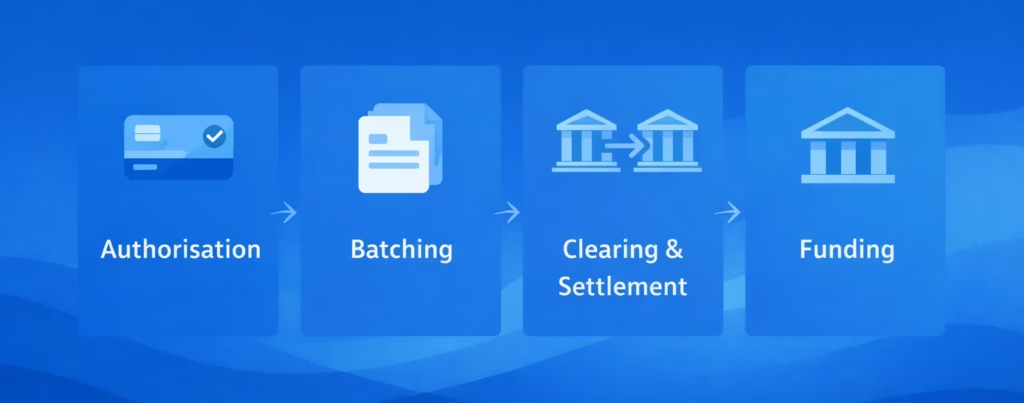
This multi-party workflow inherently takes more than a few seconds — that’s why settlement usually spans several business days.
Weekends and bank holidays also slow this down because many systems do not clear or settle on non-business days.
Credit Card Settlement Times by Payment Processor
Industry sources agree on the 1–3 business day window for most credit card settlements:
- Stripe: Most credit card settlements finish within 1–3 business days, with funding often completing within 2–3 business days after transaction date.
- Ecommpay: Merchants typically receive funds in 1–3 business days, though specific timing varies by processor and bank routing.
- Other payment infrastructure resources list 1–3 business days for standard card settlements, with accelerated options available.
Some acquiring banks or processors in Europe and the UK may see settlement nearer 1–2 business days for simple domestic transactions, due to local clearing rules and banking hours.
What Can Delay Credit Card Settlement?
Settlement isn’t a fixed clock — several things can speed it up or slow it down:
- Batch times: If your processor batches transactions late in the day, settlement may effectively shift to the next business cycle.
- Processor offerings: Some processors provide same-day or next-day funding options for faster cash flow.
- Transaction type: Domestic card transactions are usually faster; cross-border payments often take longer.
- Bank holidays/weekends: Non-business days extend settlement timelines.
- Fraud/security checks: Additional verification steps can delay settlement.
Because these variables matter, merchants looking to optimise cash flow often review payment provider capabilities beyond just headline settlement windows.
How Long Should Your Credit Card Payments Take to Settle?
Frequently Asked Questions About Credit Card Settlement
Can credit card payments settle the same day?
Yes. Some processors offer same-day settlement, but availability can depend on the processor, merchant account, transaction timing, and bank.
Do credit card payments settle on weekends?
Typically, settlement is based on business days. Transactions processed on weekends or bank holidays may not reach the merchant’s bank account until the following business days.
Why is my credit card settlement taking longer than usual?
Delays can result from late batch submissions, weekends or holidays, bank processing times, risk reviews, chargebacks, account issues, or certain transaction types.
What is the difference between authorization and settlement?
Authorization confirms that a transaction can proceed. Settlement occurs later, when the transaction is finalized and funds move through the payment system toward the merchant’s bank account.
Does settlement time depend on the payment processor?
Yes. Settlement schedules vary between processors and merchant accounts. Some businesses may qualify for next-day or same-day funding, while others follow a standard multi-business-day schedule.
Want Faster, More Predictable Payment Settlements?
Clearly Payments helps businesses find payment processing solutions with transparent pricing, reliable funding, and support from real payment experts.