
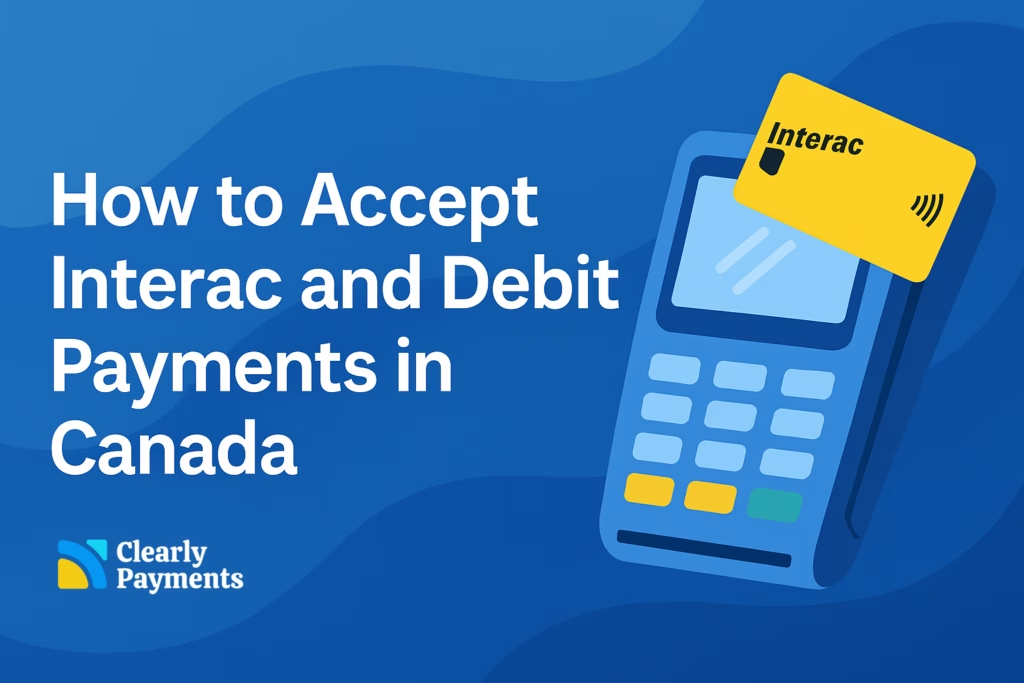
Accepting Interac and debit payments has become a core part of doing business in Canada. More than 75% of in-person transactions in the country use a debit or credit card, and Interac remains the most widely trusted method for everyday purchases.
Whether you run a retail store, a dental clinic, or an e-commerce site, understanding how Interac works and how to enable it for your customers can significantly improve checkout success and reduce your payment processing costs.
This guide explains how Interac works, the pricing models involved, the equipment you need, how online Interac payments differ from in-person ones, and how Canadian merchants can start accepting Interac quickly.
What Is Interac and Why Do Merchants Care
Interac is Canada’s national debit network. When a customer taps or inserts their debit card, the transaction routes through Interac rather than Visa or Mastercard. Because the network is domestic and tightly regulated, the fees for merchants are typically lower and the approval rates are very high.
A few reasons Interac matters for merchants:
- Debit is the most common form of payment for everyday items in Canada, which means you remove friction at checkout.
- Interac has some of the lowest transaction costs for merchants in the country.
- It works on all major payment terminals and supports tap, chip and PIN, and mobile wallets.
- Interac e-Transfer and Interac Online allow businesses to collect funds online with strong customer recognition.
Interac has become a default expectation for Canadian consumers. Merchants that do not support it often see abandoned purchases in physical locations.
How Interac Works for In-Person Payments
When a customer uses a debit card in person, three components are involved: the card, the payment terminal, and the processor. The terminal securely communicates with the customer’s bank through Interac and instantly confirms there are sufficient funds. Approved transactions send money directly from the customer’s bank account to the merchant.
Key notes for merchants:
- Most modern terminals support Interac tap up to common limits that vary by card issuer.
- Chip and PIN is used for larger amounts or when tap is not supported.
- Transactions typically settle into the merchant’s bank account within one business day.
- Interac has a reputation for high uptime and reliability.
Upgrade cycles at businesses often revolve around terminals that support Interac, mobile payments, Apple Pay, and contactless features that customers now expect.
Interac Pricing Explained
Interac pricing is usually simpler than credit card pricing. Merchants will often see one of these fee structures:
- A flat per-transaction fee, often between 4 and 12 cents
- A small monthly fee for access to the Interac network
- No percentage-based fees, which is one of the main attractions for high-volume merchants
For high-frequency retail businesses, cafes, convenience stores, and service providers, Interac debit can dramatically reduce total payment acceptance costs when compared to credit card processing.
Some processors offer unlimited Interac transactions bundled into monthly plans, while others charge per transaction. The best option depends on volume and ticket size.
Online Interac Options for Businesses
Many merchants are surprised to learn that Interac is not just for in-person payments. There are several online Interac solutions that businesses can use.
Interac Online
A direct online debit payment option where customers pay from their bank account during checkout. Adoption varies by industry, but it is used by government portals, bill payment sites, education providers, and some e-commerce merchants.
Interac e-Transfer for Business
A newer offering designed for businesses that want to receive payments faster and with automated reconciliation. Popular use cases include professional services, trades, property management, and B2B payments.
Interac e-Transfer Request Money
Merchants can send a payment request and customers pay through their online banking. This reduces fraud because customers never enter card numbers.
Online Interac products are continuing to expand and are particularly useful for service-based companies and invoice-based businesses.
Terminals & Hardware Needed to Accept Interac
To accept Interac debit in person, you need a payment terminal that is certified for Interac transactions. The most common hardware types in Canada include:
- Mobile wireless terminals
- Countertop terminals with Ethernet or WiFi
- Smart Android-based terminals with large touchscreens
- PIN pads that integrate with POS systems
Most new terminals support Interac by default. The bigger difference is whether they offer tap, chip and PIN, and the newer features like QR code payments or enhanced security profiles.
For businesses wanting both online and in-person debit acceptance, the processor simply enables both under one merchant account.
How to Choose a Payment Processor for Interac
When selecting a payments partner to support Interac, merchants should look at five key factors:
- Pricing transparency. A clear breakdown of the per-transaction fee or monthly Interac cost.
- Hardware choice. Modern terminals that support contactless payments, Apple Pay, and Android Pay.
- Integration support. Semi-integrated devices that reduce PCI scope and avoid messy manual reconciliation.
- Funding speed. Next-day deposits are standard, but some processors offer same-day deposits.
- Support quality. This matters more than most merchants realize because downtime means lost revenue.
A processor like Clearly Payments provides Interac acceptance for both card present and online payments with competitive rates and straightforward onboarding.
Accept Interact now with Clearly Payments
- Wide range of supported industries
- Fast funding
- A full set of payment products to accept payment anytime, anywhere
- World-class customer service