Credit cards are one of the most common ways Canadians pay for everyday purchases, from coffee shops to enterprise SaaS subscriptions. For merchants, credit card processing can feel opaque, especially when fees, approvals, and settlement timelines are bundled into a single monthly statement. Understanding how the system works helps you control costs, reduce risk, and make better decisions about your payment setup.
This article focuses on credit card processing. You can also read our article on an overview of Interac, which is also an important part of the Canadian payment ecosystem.
What Actually Happens When a Customer Pays
Every credit card transaction follows a structured path that usually completes in just a few seconds. While it feels instant to the customer, several systems are working behind the scenes to authorize and move the money.
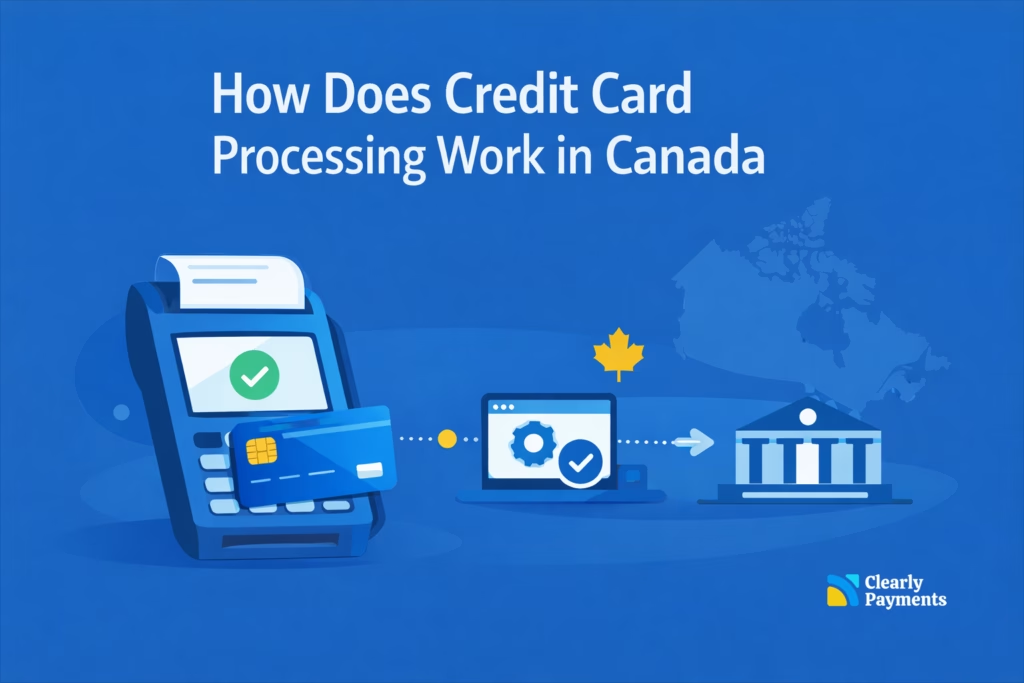
When a customer taps, inserts, swipes, or enters their card details online, the payment request is sent from your terminal or checkout to your payment processor. The processor routes the transaction through the card network, such as Visa or Mastercard, to the customer’s issuing bank. The issuing bank checks available credit and fraud signals, then sends back an approval or decline.
Approved transactions are later grouped together and settled, at which point funds are transferred to your acquiring bank and deposited into your business account, minus processing fees.
The Key Players Behind Every Transaction
Credit card payments work because several parties each play a specific role. Knowing who does what makes it easier to understand fees and resolve issues.
The cardholder is your customer. The merchant is your business. The issuer is the customer’s bank, which provides the credit. The acquirer is the bank or financial institution that works with your payment processor to accept cards on your behalf. The card network sets the rules, routes transactions, and establishes interchange rates.
Each party takes on part of the risk, which is why fees are split across multiple components.
How Credit Card Fees Are Structured in Canada
Processing fees are not a single charge, they are a combination of underlying costs that appear bundled on your statement. The largest portion is interchange, which is paid by the merchant’s bank to the customer’s bank. Interchange rates vary based on card type, rewards level, and how the transaction is processed.
On top of interchange, payment processors add a markup to cover services like reporting, customer support, fraud tools, and risk management.
For most Canadian businesses in 2025, typical ranges look like this:
- Visa and Mastercard in-store transactions usually fall around 1.4% to 2.0%
- Online or card-not-present transactions are commonly 1.8% to 2.4%
- American Express is often higher, roughly 2.0% to 3.5%
- Interac Debit is significantly cheaper, often closer to a flat or very low % equivalent
Higher fees for online payments reflect higher fraud and chargeback risk.
The Size of the Canadian Card Payments Market
Credit cards are not a niche payment method in Canada, they are a core part of the economy. Market scale helps explain why fees, regulations, and network rules matter so much to merchants.
Canada processes roughly 22.5 billion payment transactions annually, representing about $12.2 trillion in total value. Credit cards account for approximately one-third of all transactions by volume, around 7.5 billion payments per year, with an average transaction size close to $105.
An estimated 1.1 to 1.3 million Canadian businesses accept credit cards today, representing close to 90% of all merchants. Total annual credit card spending in Canada is projected to reach roughly $605 billion in 2025, growing at about 5.3% per year through the end of the decade.
Interchange Reductions & Impact on Merchants
Policy changes can have a real impact on merchant costs, especially for small and mid-sized businesses. In recent years, Canada has moved to reduce interchange rates for eligible merchants.
Recent reductions lowered certain interchange rates by up to 27% for small businesses, which can translate into meaningful annual savings. However, these reductions only apply to the interchange portion of fees, not processor markups. This is why understanding your full pricing structure still matters.
What Canadian Merchants Should Focus On
Credit card acceptance drives sales, improves customer experience, and is often non-negotiable for modern businesses. At the same time, processing costs can quietly erode margins if they are not understood or reviewed regularly.
Merchants who know how interchange works, which cards their customers use, and how their processor earns revenue are in a much stronger position to optimize pricing, reduce unnecessary fees, and choose the right payment setup for their business.
Key Takeaways: Canada Credit Card Processing
- Credit card processing in Canada involves multiple parties working together to authorize and settle payments
- Most merchants pay between roughly 1.4% and 2.4% for Visa and Mastercard transactions, depending on how the card is used
- Credit cards represent about one-third of all payment transactions in Canada and hundreds of billions in annual spend
- Understanding your processing structure is one of the most effective ways to protect margins and scale confidently