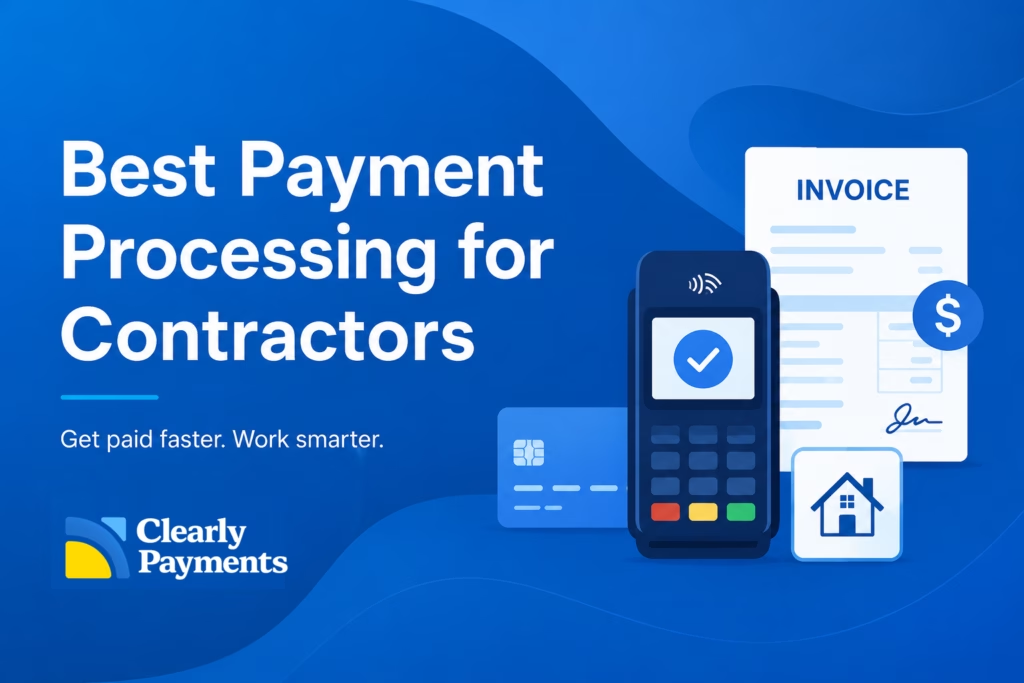
Whether you’re an electrician, plumber, HVAC company, roofer, landscaper, painter, home renovator, or general contractor, getting paid quickly matters. Contractors often pay for labour, materials, fuel, equipment, and insurance before the customer has fully paid. That makes reliable payment processing an important part of running a healthy contracting business.
Today, customers expect convenient payment options. Many prefer to pay by credit card, debit card, or mobile wallet instead of writing a cheque or arranging a bank transfer. The right payment processing solution helps contractors accept payments on-site, send online invoices, collect deposits, reduce administrative work, and improve cash flow.
This guide explains what contractors should look for in a payment processor, which payment methods work best, and how to choose a provider that fits the way your business operates.
Why Payment Processing Matters for Contractors
Payment processing is not just about accepting credit cards. For contractors, it is about creating a faster and more reliable payment cycle. Every day an invoice remains unpaid is another day your business is funding payroll, materials, fuel, and supplier costs out of pocket.
Modern payment systems help contractors collect payments at different stages of a job. You can accept a deposit before work begins, collect progress payments during larger projects, take payment on-site when work is complete, or send an invoice with a secure online payment link. This flexibility helps reduce outstanding receivables and gives customers a smoother payment experience.
A better payment system can help contractors:
Improve cash flow
Reduce unpaid invoices
Get paid before leaving the job site
Accept deposits and progress payments
Offer customers more payment options
Spend less time chasing payments
Present a more professional image
What Contractors Should Look for in a Payment Processor
Not every payment processor is built for contractors. A retail store usually takes payments at a fixed checkout counter. Contractors often work in the field, visit customer locations, process larger invoices, and need flexible ways to collect payment.
When comparing payment processors, look beyond the advertised rate. The best provider should help your business get paid faster, keep costs transparent, and support both in-person and remote payments.
1. Mobile Payment Acceptance
Contractors need to accept payments where the work happens. That could be at a home, job site, commercial building, office, warehouse, or property management location. A mobile payment solution lets your team collect payment immediately after the job is complete.
Wireless terminals and mobile card readers can accept payments using Wi-Fi or cellular connectivity. This is especially useful for service businesses that complete multiple jobs per day and want to avoid sending invoices after every visit.
Look for support for:
Visa
Mastercard
American Express
Debit cards
Tap payments
Apple Pay
Google Pay
Collecting payment before leaving the job site can dramatically reduce collection delays.
2. Online Invoicing
Some customers will not pay immediately on-site. Commercial clients, property managers, builders, and larger organizations often require invoices before payment can be approved.
Online invoicing makes this process faster and easier. Instead of mailing invoices or waiting for cheques, contractors can email a professional invoice with a secure payment link. The customer can review the invoice and pay online by credit card or other supported payment methods.
A strong online invoicing solution should help you:
Email invoices
Include secure payment links
Accept deposits
Accept partial payments
Track payment status
Send payment reminders
Issue receipts automatically
For many contractors, online invoicing reduces the time between completing work and receiving payment.
3. Transparent Pricing
Payment processing fees directly affect your profit margin. This matters even more for contractors because invoices are often larger than typical retail transactions. A small difference in processing cost can add up quickly over a year.
Many providers advertise a simple rate, but the real cost may include extra monthly fees, equipment fees, gateway fees, premium card charges, PCI fees, or contract penalties. The most important number is your total effective processing rate after all costs are included.
Ask each provider to explain:
Transaction fees
Monthly account fees
Equipment costs
Gateway fees
PCI compliance fees
Statement fees
Chargeback fees
Contract length
Cancellation fees
Transparent pricing makes it easier to compare providers and avoid surprises.
4. Fast Deposits
Cash flow is one of the biggest challenges for contractors. Materials, payroll, fuel, subcontractors, and supplier invoices often need to be paid before customers settle their bills.
A payment processor with fast deposits helps turn completed jobs into available working capital sooner. Even reducing funding time by one or two days can make a meaningful difference during busy seasons or large projects.
When comparing providers, ask how quickly funds are deposited and whether faster funding is available.
5. Support for Large Transactions
Many contractors process high-value transactions. A plumber might process a smaller repair invoice, while a roofer, HVAC installer, renovator, or general contractor may process payments worth thousands or tens of thousands of dollars.
Your payment processor should understand larger ticket sizes and provide support when a transaction requires review or verification. This can help avoid unnecessary holds, delays, or confusion.
Large transaction support is especially important for:
Roofing companies
HVAC companies
Renovation contractors
General contractors
Solar installers
Commercial contractors
Equipment installers
6. Reliable Hardware
Contractors need payment hardware that works in the field. A terminal sitting on a clean retail counter has a very different life than one carried between trucks, homes, offices, and job sites.
The right hardware should be portable, reliable, and easy for technicians to use. Battery life, connectivity, tap support, and durability often matter more than advanced retail features.
Common options include:
Wireless payment terminals
Cellular payment terminals
Mobile card readers
Portable countertop terminals
Virtual terminals for office payments
Choose hardware based on how your team actually collects payments.
Best Ways for Contractors to Accept Payments
Most contractors need more than one payment method. A small emergency service call may be paid on-site, while a larger renovation may involve a deposit, progress payments, and a final invoice.
Offering multiple payment options makes it easier for customers to pay and helps your business collect funds faster.
Accept Payment at the Job Site
On-site payment is often the fastest way for contractors to get paid. Once the work is complete, the customer can pay immediately by card or mobile wallet before your technician leaves.
This works especially well for:
Plumbing
Electrical work
HVAC service
Appliance repair
Locksmith services
Cleaning services
Maintenance work
Landscaping visits
The main benefit is simple: fewer unpaid invoices and less follow-up.
Send Online Invoices
Online invoices are useful when payment cannot be collected immediately. They are especially helpful for commercial work, property management, larger projects, and customers who require invoice approval.
A payment link makes the invoice easier to pay. Instead of printing a cheque or arranging a bank transfer, the customer can pay securely online.
This works well for:
Property managers
Builders
Commercial clients
Municipal organizations
Corporate customers
Larger residential projects
Collect Deposits
Many contractors collect deposits before scheduling work, ordering materials, or committing labour. This protects cash flow and reduces the risk of starting a job without customer commitment.
Electronic deposits create a clear payment record and make the process more convenient for customers. For larger projects, deposits can also be followed by progress payments and a final balance.
Accept Progress Payments
Progress payments are common for larger jobs. A contractor may collect payment after each milestone, such as material delivery, rough-in, inspection, installation, or project completion.
A good payment system should make milestone payments easy to process and track. This helps contractors avoid carrying the full cost of a project until the end.
Automate Recurring Payments
Some contractors provide ongoing maintenance or recurring services. In these cases, recurring billing can reduce administration and create more predictable revenue.
Recurring payments can work well for:
Lawn care
Snow removal
Pool maintenance
Property maintenance
Equipment servicing
Security monitoring
Preventive maintenance plans
Automated billing reduces missed payments and saves time for both the contractor and the customer.
Features That Save Contractors Time
The best payment processors do more than process card transactions. They also help reduce administrative work, improve reporting, and make it easier to manage customer payments.
For contractors, time savings can be just as valuable as lower processing rates. If your office spends hours each week chasing invoices, reconciling payments, or manually entering data, better payment tools can have a real impact on productivity.
Useful features include:
Digital receipts
Customer payment history
Payment links
Virtual terminal
Invoice tracking
Refund management
Team permissions
Reporting and analytics
Accounting software integration
Customer management system integration
A payment system should make the back office easier, not more complicated.
How Contractors Can Reduce Payment Processing Costs
Contractors should not choose a processor based only on the lowest advertised rate. The goal is to reduce the total cost of accepting payments while still getting reliable service, strong support, and useful tools.
There are several ways contractors can manage payment costs without making the customer experience worse.
Understand Your Effective Rate
Your effective rate is your total processing cost divided by total processed volume. This gives you a clearer picture of what you are actually paying after all fees are included.
For example, if your business processes $100,000 in card payments and pays $2,700 in total fees, your effective rate is 2.7%.
This is often more useful than comparing advertised rates.
Use Interchange-Plus Pricing
Interchange-plus pricing is often a strong option for established contractors with meaningful processing volume. It separates the underlying card network costs from the processor markup.
This pricing model can be more transparent than flat-rate pricing because you can see the actual cost structure more clearly. It may also reduce costs for businesses with larger transaction volumes.
Avoid Long-Term Equipment Rentals
Some contractors end up paying for terminal rentals for years. Over time, this can become more expensive than buying equipment or choosing a flexible hardware plan.
Before signing an agreement, compare the total cost of renting, leasing, or purchasing payment hardware.
Review Your Statement Regularly
Payment processing statements can be confusing, but reviewing them is important. Fees may change, transaction mix may shift, or unnecessary charges may appear over time.
A good processor should be willing to review your statement and explain what you are paying in plain language.
Common Payment Processing Mistakes Contractors Make
The wrong payment setup can create higher costs, slower payments, and extra administrative work. Many contractors do not realize there is a problem until they review their statements or experience delayed funding.
Here are common mistakes to avoid.
Choosing Based Only on Advertised Rates
The lowest advertised rate is not always the lowest total cost. Some providers promote simple pricing but add costs elsewhere through monthly fees, hardware costs, premium card pricing, or contract terms.
Always compare the full cost, not just the headline rate.
Waiting Too Long to Invoice
Every delay in invoicing delays payment. Contractors should aim to send invoices immediately after work is complete, or collect payment on-site whenever possible.
A faster invoicing process leads to faster payment.
Relying Too Much on Cheques
Cheques can delay cash flow and create extra administrative work. They need to be written, mailed, deposited, cleared, and reconciled.
Digital payments are usually faster and easier to track.
Using Consumer Payment Apps
Consumer payment apps may seem convenient for small jobs, but they are often not ideal for growing businesses. Contractors usually need better reporting, business support, team access, payment records, and professional invoicing.
A dedicated merchant account is usually a better long-term solution.
Ignoring Chargeback Risk
Contractors can face disputes when customers are unhappy with timing, scope, quality, or billing expectations. Clear contracts, deposits, signed approvals, detailed invoices, and payment records can help reduce this risk.
Your payment processor should also provide support if a chargeback occurs.
Payment Processing for Different Types of Contractors
Different contractors have different payment needs. The best payment setup depends on how jobs are sold, completed, billed, and collected.
Electricians and Plumbers
Electricians and plumbers often complete service calls at customer locations. Mobile terminals and on-site payments are especially useful because the customer can pay as soon as the work is finished.
Online invoicing is also helpful for commercial clients and property managers.
HVAC Contractors
HVAC businesses often handle both small service calls and larger equipment installations. That means they may need mobile payments, deposits, progress payments, and large transaction support.
Fast funding is especially important when equipment must be purchased upfront.
Roofers and Renovation Contractors
Roofing and renovation projects often involve larger invoices and staged payments. A good payment processor should support deposits, milestone payments, online invoices, and high-value transactions.
Clear payment records are important because these projects can involve multiple payment stages.
Landscapers and Property Maintenance Companies
Landscaping and maintenance businesses may benefit from recurring billing, seasonal payment plans, and online invoicing. This is especially useful for monthly services, snow removal, lawn care, and property maintenance contracts.
Recurring payments can reduce missed payments and improve predictable cash flow.
General Contractors
General contractors often manage complex projects with multiple invoices, deposits, subcontractors, and progress payments. They need a payment solution that provides flexibility, reporting, and reliable support.
For general contractors, payment processing should help manage cash flow across the entire project lifecycle.
Why Contractors Choose Clearly Payments
Clearly Payments helps contractors accept payments more easily while keeping pricing transparent. Contractors need a payment partner that understands cash flow, field payments, large invoices, and the importance of responsive support.
Clearly Payments serves businesses across North America with payment solutions designed to reduce complexity and improve the way businesses get paid.
Clearly Payments offers:
Competitive interchange-plus pricing
Transparent, easy-to-understand fees
Wireless and mobile payment terminals
Online invoicing
Virtual terminals
Payment links
Fast funding
Support for deposits and larger transactions
North American customer support
Flexible agreements with no long-term contracts on most plans
Whether you are an independent tradesperson or manage multiple crews, Clearly Payments can help you build a payment setup that fits the way your business operates.
Frequently Asked Questions
What is the best payment processing for contractors?
The best payment processing for contractors usually includes mobile payment acceptance, online invoicing, transparent pricing, fast deposits, and support for deposits or progress payments. The right provider depends on your transaction size, payment volume, business type, and how your customers prefer to pay.
Can contractors accept credit card payments on-site?
Yes. Contractors can accept credit card, debit card, tap, and mobile wallet payments on-site using wireless terminals or mobile card readers.
Can contractors send invoices with payment links?
Yes. Online invoices with secure payment links allow customers to pay remotely by card. This is useful for commercial clients, property managers, builders, and larger residential projects.
Should contractors accept credit cards?
For many contractors, yes. Credit cards can improve cash flow, reduce unpaid invoices, and make payment more convenient for customers. The key is choosing a processor with transparent pricing and the right features.
Can contractors collect deposits by credit card?
Yes. Contractors can collect deposits electronically before scheduling work, ordering materials, or starting a project.
What is a virtual terminal?
A virtual terminal allows a business to enter payment information securely from a computer. This is useful when taking payments over the phone or from the office.
Are mobile payment terminals good for contractors?
Yes. Mobile terminals are often one of the best options for contractors because they allow payment to be collected in the field immediately after work is complete.
How can contractors reduce payment processing fees?
Contractors can reduce fees by reviewing their effective rate, choosing transparent pricing, avoiding unnecessary equipment rentals, and working with a processor that explains fees clearly.
What is interchange-plus pricing?
Interchange-plus pricing separates the underlying card network costs from the processor markup. It is often more transparent than flat-rate pricing and may be cost-effective for contractors with higher payment volume.
Do contractors need a merchant account?
Most growing contractors benefit from a dedicated merchant account because it provides better reporting, support, pricing options, and professional payment tools compared with consumer payment apps.
Final Thoughts
The best payment processor for contractors is not simply the provider with the lowest advertised rate. It is the provider that helps your business get paid faster, keeps costs clear, supports your payment workflow, and gives your customers convenient ways to pay.
For contractors, the right setup often includes mobile terminals, online invoicing, deposits, progress payments, fast deposits, and responsive support. These features can reduce administrative work, improve cash flow, and make your business look more professional.
Clearly Payments helps contractors across North America accept payments wherever business happens. With transparent pricing, flexible payment tools, and support for field-based businesses, Clearly Payments can help your contracting business get paid faster and keep more of what it earns.