
Best Payment Processing for Contractors (2026 Guide)
Whether you’re an electrician, plumber, HVAC company, roofer, landscaper, painter, home renovator, or general contractor, getting paid quickly matters. Contractors often pay for labour,…
In the world of finance, electronic payments are the heartbeat of business transactions. Whether you’re dealing with routine bills, processing paychecks, or handling high-stakes international transfers, understanding the nuances of electronic fund transfers (EFTs) is crucial. This article goes into the details of ACH and wire transfers, providing business owners and merchants with insights into their real-world applications.
When it comes to electronic payments, two major players stand out in the United States: ACH transfers and wire transfers. While both methods fall under the broader category of Electronic Fund Transfers (EFTs), they cater to distinct needs within the business landscape.
Automated Clearing House (ACH) transfers operate through a secure network designed for batch processing. Suited for routine, high-volume, and low-urgent transactions, ACH transfers are ideal for tasks like payroll, bill payments, and vendor disbursements.
In general, the cost of ACH payments are much lower than credit card payments. They can be a fixed fee like $1 to $2 or sometimes a percentage fee of 0.5% of the total amount being transferred.
Wire transfers, in contrast, provide a direct and immediate method for transferring funds electronically. Often chosen for high-value and time-sensitive transactions, wire transfers offer a global reach, facilitating international transactions efficiently.
The costs for wire transfers can fluctuate significantly. Numerous banks and financial platforms impose substantial fees for these transfers. It’s common to face charges ranging from $15 to $50 or even more for domestic transactions, with elevated fees for international transfers. Additionally, it’s important to consider potential exchange rates that may apply in such transactions.
The decision between ACH transfers and wire transfers hinges on the specific needs and priorities of a business. For routine transactions with a focus on cost-effectiveness, ACH transfers may be the preferred choice. Conversely, for high-value, time-sensitive, and global transactions, wire transfers offer unparalleled speed, despite higher costs.
Business owners must consider factors such as transaction speed, cost, international reach, and the nature of their financial transactions when making decisions about electronic fund transfers. In some cases, a strategic combination of both ACH and wire transfers may provide the optimal solution to meet diverse business requirements.
The above article is focused on the USA. However, there are some terminology difference between Canada and USA. In both countries, the term “wire transfers” are used. ACH is a different story. The term ACH in the USA is the same as the term EFT in Canada. This can sometimes make things confusing.
In the United States, the primary electronic fund transfer system is referred to as Automated Clearing House (ACH). ACH is a network that facilitates electronic transactions, including direct deposits, bill payments, and various financial transactions. Governed by the National Automated Clearing House Association (NACHA), the term “ACH” is widely recognized in the U.S. and signifies a specific system for processing electronic payments.
On the other hand, in Canada, the term used is “Electronic Funds Transfer” (EFT). EFT in Canada is a broader concept that encompasses a variety of electronic payment methods, such as Direct Deposit, Pre-Authorized Debit (PAD), and Electronic Data Interchange (EDI). It’s a comprehensive term that includes various systems facilitating electronic financial transactions within the country.
Clearly Payments can review your processing setup, pricing or payment technology.
Talk to Clearly →
Whether you’re an electrician, plumber, HVAC company, roofer, landscaper, painter, home renovator, or general contractor, getting paid quickly matters. Contractors often pay for labour,…
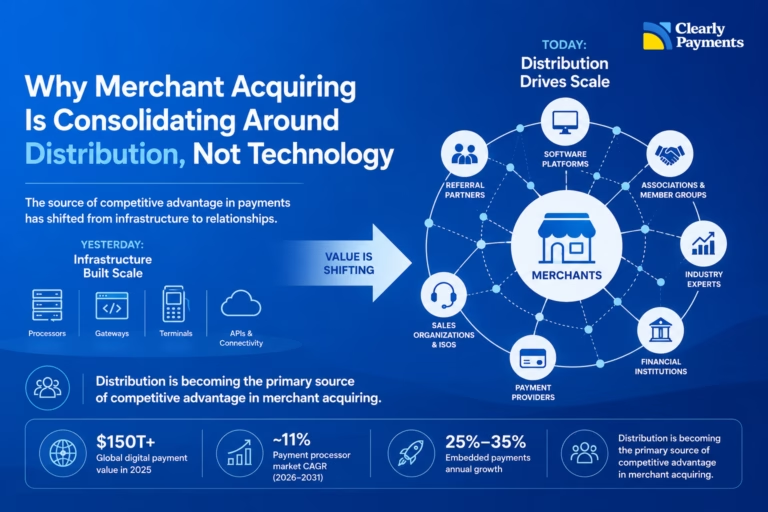
The payments industry has spent decades investing in technology. Processors built massive infrastructure platforms. Acquirers invested billions in connectivity, security, compliance, hardware certifications, and…
Accepting credit cards is essential for most businesses today, but the fees can quietly add up. Many merchants assume payment processing rates are fixed,…